Occasionally the Ehrenberg-Bass Institute will provide public access to a research report. This report has been released simultaneously to Ehrenberg-Bass Sponsors.
Ehrenberg-Bass Sponsors have exclusive access to hundreds of reports like this, as well as videos, marketing commentary, access to Q&A with our researchers and many other resources. If you would like to learn more about the benefits of being an Ehrenberg-Bass Sponsor please contact us.
The Ehrenberg-Bass Institute specialise in research services that are underpinned by robust evidence. Explore these services and how they can fit within your organisation.
Brand Purpose…Are consumers aware to care?
By Victoria Tait, Dr Virginia Beal, Prof John Dawes and Prof Byron Sharp
Abstract
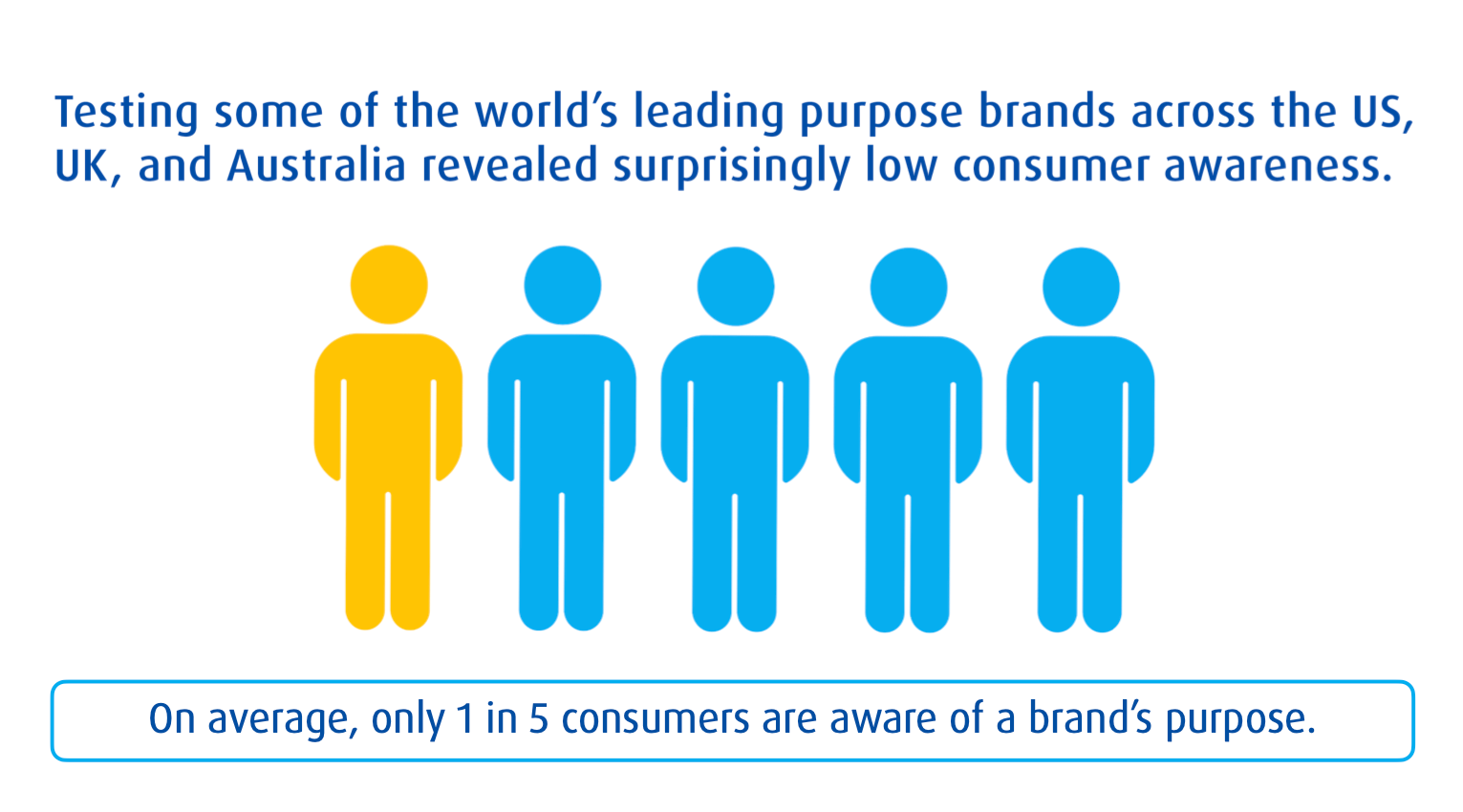
Brand purpose is presented as giving consumers an altruistic reason to buy, and is credited with potentially delivering a range of business benefits — from increased sales and stronger loyalty to brand differentiation and premium pricing. Yet for any of these benefits to occur, consumers must first be aware of the brand’s altruistic purpose. To explore this consumer awareness, we conducted surveys across three countries—the US, the UK and Australia—focusing on 14 brands widely regarded within the marketing community as exemplars of purpose-led strategies. Yet, even among these best-in-class purpose brands consumer awareness of their stated brand purposes was surprisingly low – averaging just 18%, or roughly two in ten consumers. This figure is the ‘best case scenario’ as it includes an estimated guessing rate of around 9 percentage points. We assessed guessing by including dummy purpose attributes, for example, 4% of UK and 9% of US respondents agreed that Patagonia “advocates for neuroscience led literacy.” These false positives suggest that genuine awareness of brand purpose rarely exceeds 10%.
One exception was Nike, where 32% in the UK and 52% in the US, knew them for “promotes diversity and inclusion in sport.” However, this is partly an artefact of Nike’s very high brand penetration, as bigger brands score higher across any image perception, a pattern that will be explored in part two of this report (to be released shortly).
This research shows that it is extremely difficult to build awareness of a brand’s purpose, let alone using it to drive behaviour change. This is important for any brand strategist to know if they are contemplating investing in a purpose strategy. Opportunity costs also need to be considered, as investing in building awareness of purpose comes at the expense of investing in building other memory associations or other actions that make the brand easier to buy, we will consider this further in part two of this report.
Disclaimer
I would like to introduce myself—I’m Victoria Tait, the lead researcher on this study. I specifically chose the topic of “brand purpose” because I believe in the positive impact brands can have on society and the environment. As a ‘conscious consumer’, I try to align my purchases with my values, supporting brands like Patagonia for their environmental efforts. I began this research convinced that many others share this mindset. However, despite my initial optimism, I have to follow the evidence, even if it contradicts my expectations or hopes.
Background
Brand purpose, as a marketing strategy, has gained significant industry attention and been backed by some of the biggest consumer goods companies worldwide. Despite reports suggesting that the adoption of brand purpose has slowed in the last two years, the tactic is still popular.
In this research, brand purpose as a marketing strategy is defined as:
…a brand’s publicised commitment to an environmental/social objective which has the aim of providing an altruistic benefit to those that buy the brand.
Brand purpose strategy has been promoted as delivering benefits to firms, such as increased sales, stronger customer loyalty, the ability to stand out from competitors and charge premium prices and to consumers an altruistic benefit, provided they value the particular purpose. Such important claims need to be supported by reliable empirical evidence. This is especially needed when a strategy is seen as morally worthy as good intentions can cloud judgement and discourage open-minded scepticism. It’s also worth investigating because if ‘doing the right thing’ is also good marketing strategy then this will encourage more firms to do so.
All of the benefits that brand purpose claims to deliver depends on consumers knowing and valuing the brand purpose and, as a result, perhaps changing their behaviour. So we measured consumers’ awareness of brand purpose. We carefully analysed the data in light of contextual evidence, i.e. the scores brands received for non-purpose perceptions, and the scores they received for false/dummy purpose statements. In a follow-up report we’ll compare purpose scores to other perceptual scores, but here we focus on reporting the level of recognition of brand purpose.
Research Method
The first step was to select brands that were ‘exemplars’ of the brand purpose strategy. That is, brands that have been consistently executing their brand purpose for a significant amount of time. These purpose brands were selected based on secondary research (e.g. via their advertising, packaging, websites, and advertising awards), and then confirmed with other independent researchers. The selected purpose brands are displayed below.
Figure 1: Purpose brands used in the study
 The next stage was collecting perceptions via online surveys from close to 3,000 respondents across the US, UK and Australia. Purpose awareness and other perceptions were measured using a free choice pick-any approach. Respondents were presented with an attribute (e.g. “great to bring to a friend’s house”) and asked to identify which, if any, brand/s they associate with the statement.
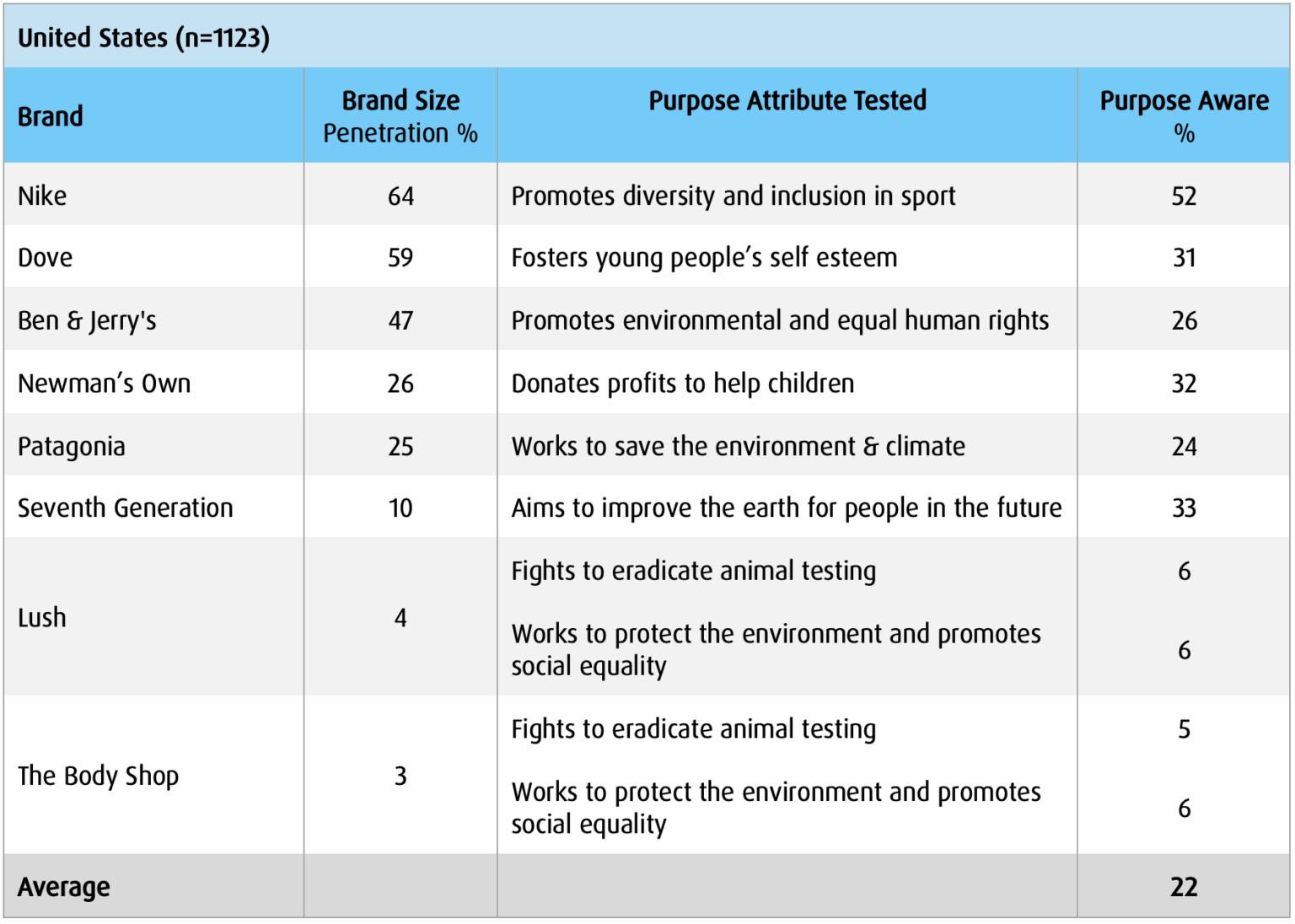
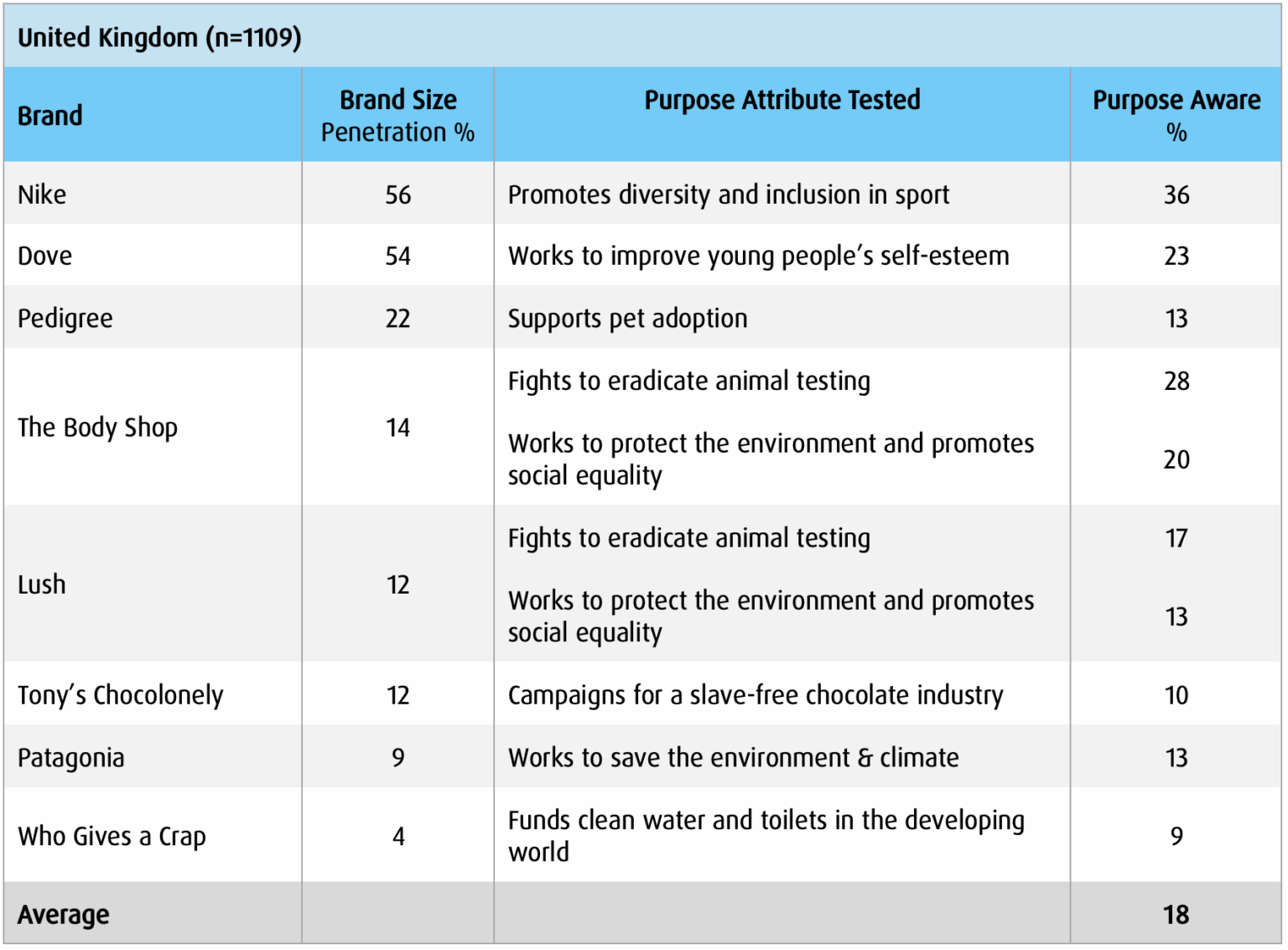
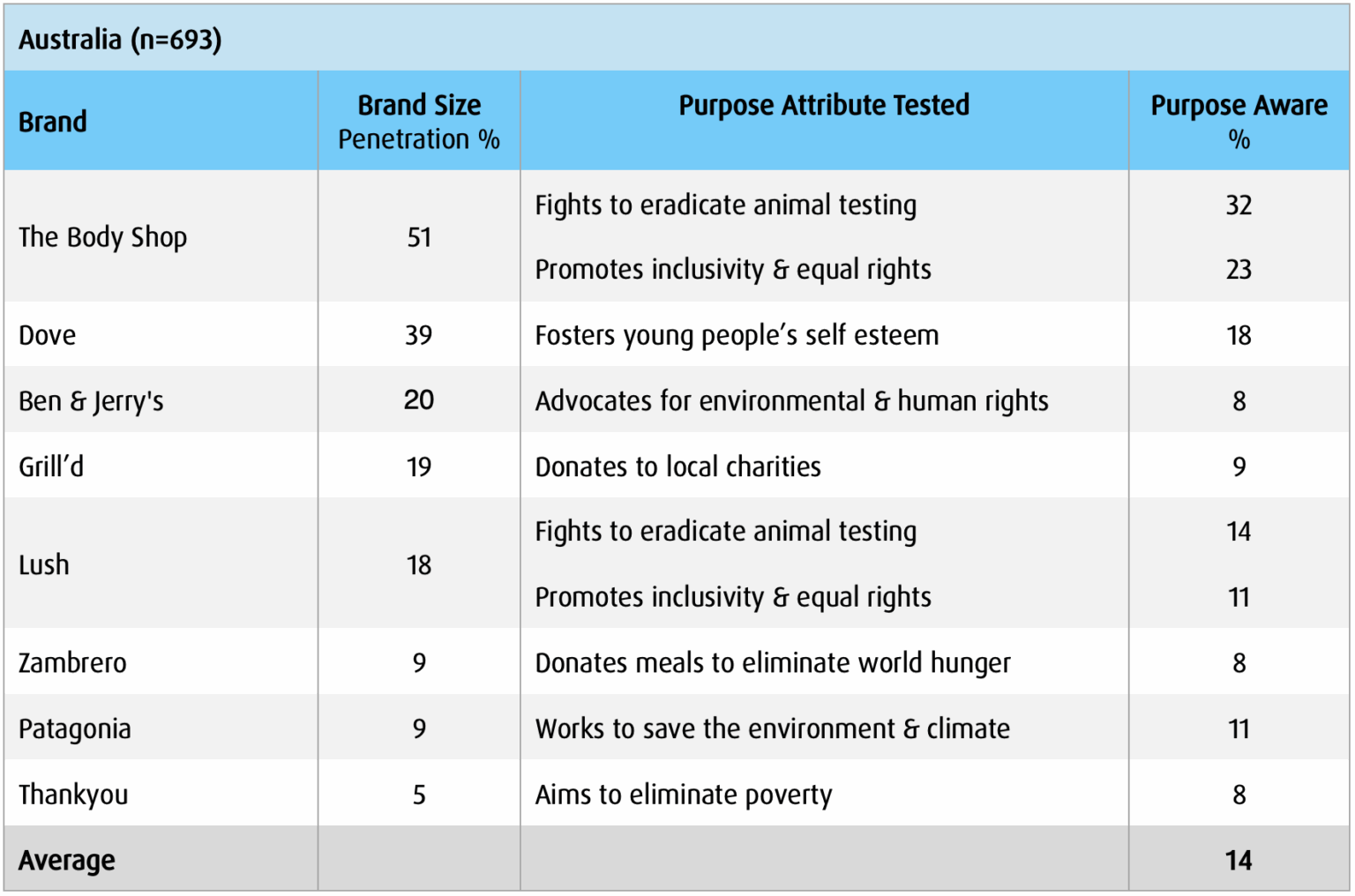
The attributes used for this study included both purpose and non-purpose attributes, as well as non-purpose brands, to benchmark associations across the category. Respondents were classified as “purpose aware” if they could correctly link the purpose attribute to the respective purpose brand. Respondents did not need to be aware of every brand purpose to be classified as “purpose aware”, this was determined at brand level for each category. See Table 3 in the Appendix for the purpose brands and purpose attributes, and Table 4 for the dummy purposes.
Results
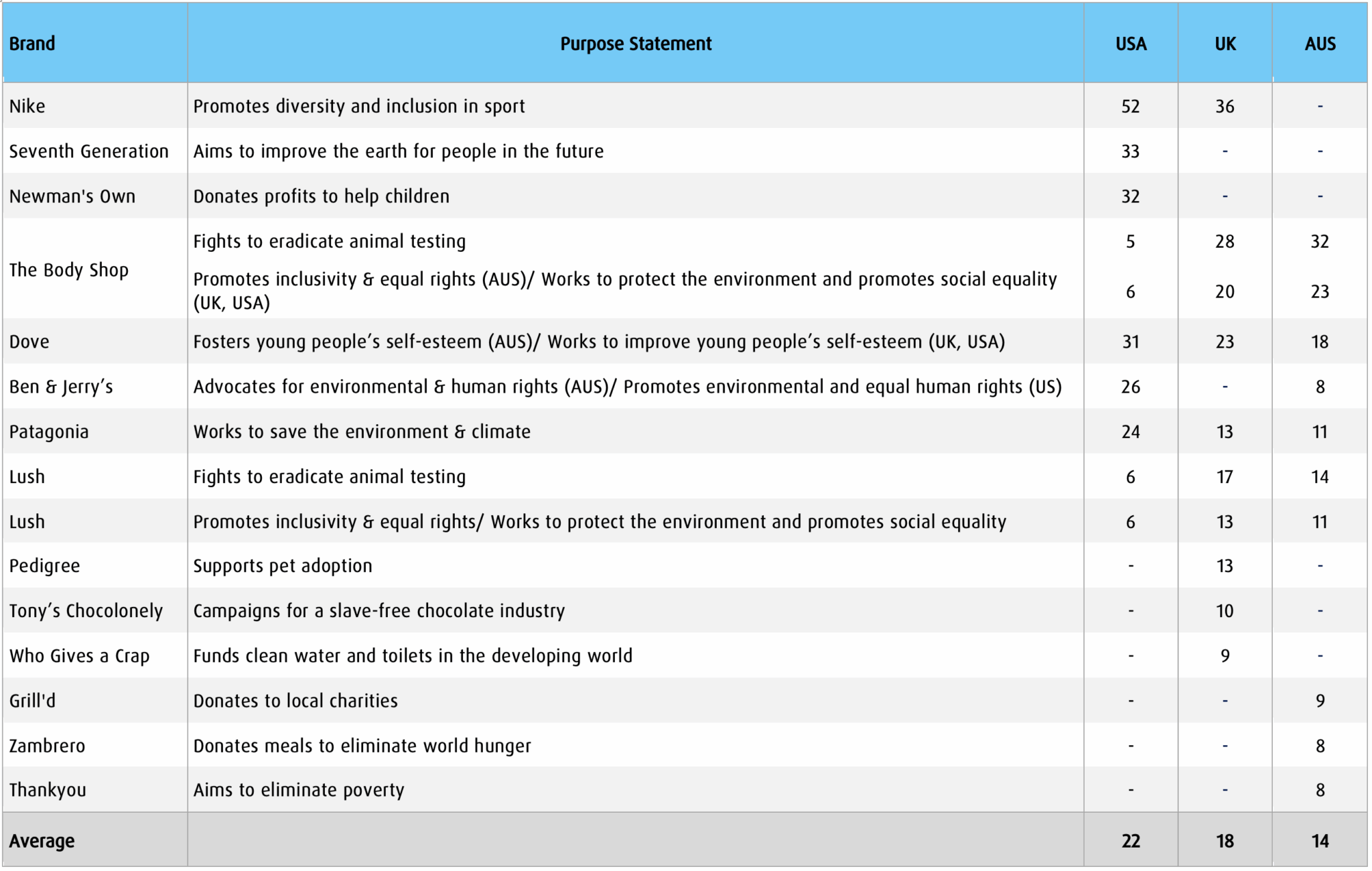
Table 1 shows the purpose recognition results for each brand, sorted by brand size. On average, a purpose brand in Australia scored 14% (consumers who recognised the brand’s purpose), 18% in the UK and 22% in the US. Almost all brands scored under 30%, with Nike being an outlier, scoring 32% in the UK and 52% in the US. These scores need to be interpreted in the context that all these brands have been promoting their purpose for a long time.
Table 1: Brand Purpose Recognition of Leading Purpose Brands (%)*

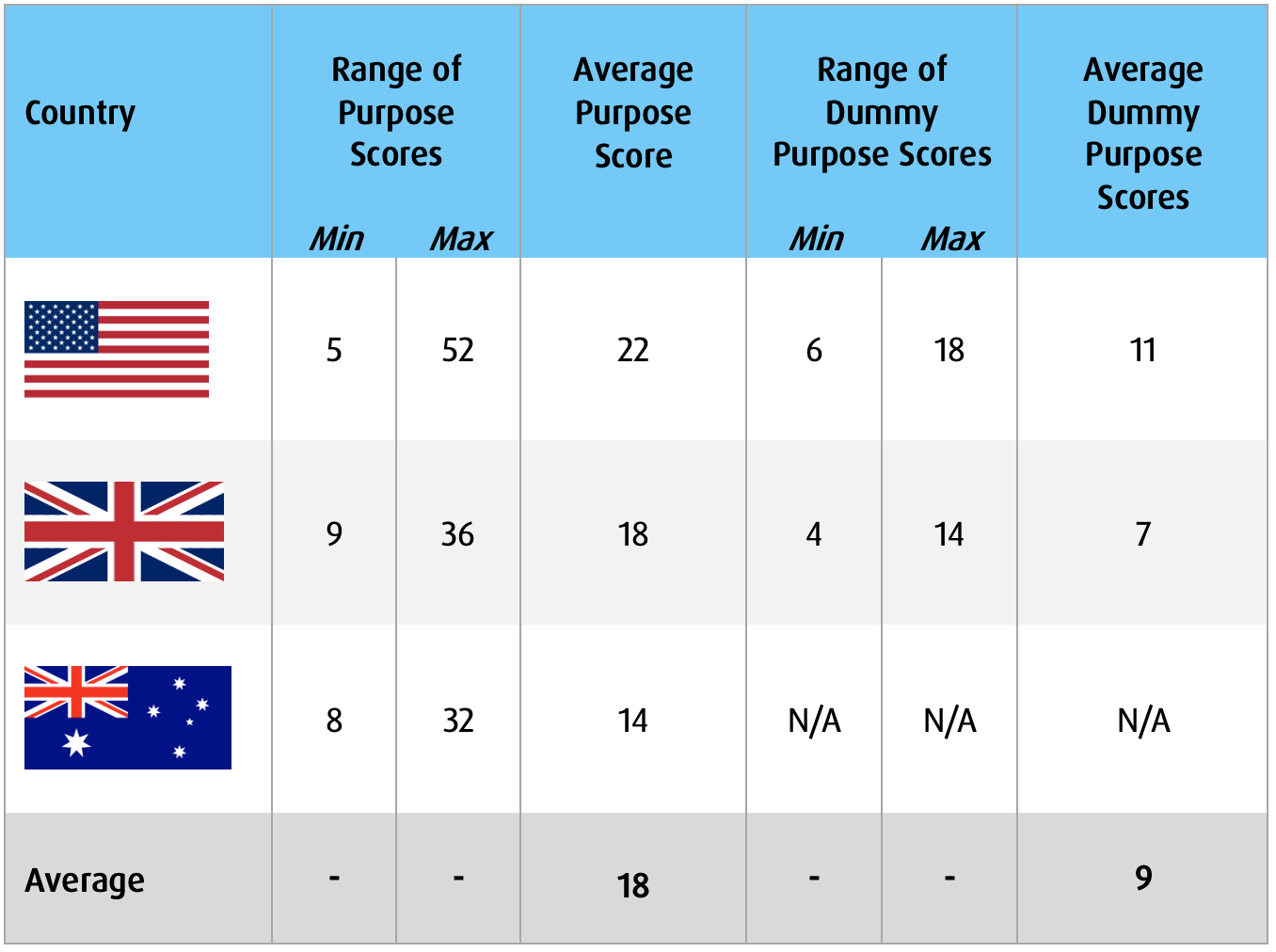
Overall, across the three countries, the total average purpose recognition was 18% (ranging from 5% to 52%). The dummy purposes scored on average 9% – this tells us that in these surveys, like most others, there is some level of guessing. So it’s quite possible that the real score for these exemplar brands could be as low as 9% (i.e. 18 – 9 = 9%).
Table 2: Average Purpose Scores Compared to Dummy Purpose (%)
 The brand purpose recognition levels are remarkably low, even among some of the world’s leading purpose brands. This is notable given the study acknowledges a level of guessing is occurring and used a method that aided brand recall rather than an unprompted approach. The brands selected for this research are recognised leaders in purpose marketing, with over half consistently communicating their purpose for 20 years or more. If even the ‘leading’ purpose brands are failing to cut through and build consumer awareness, suggests that there may be an inherent challenge in creating a purpose link for brands in consumer memory.
Moreover, the data reveals that some purpose scores may be reflective of the user base, i.e., these brands didn’t necessarily have more consumers aware of their purpose, they simply had more brand users to link it to any attribute. This will be explored in part two of this report.
Key Implications for Marketers
Have realistic expectations of brand purpose and be cautious of industry claims
The findings from this study offer valuable insights for marketers, helping to set more realistic expectations around brand purpose initiatives, particularly in terms of consumer response. For example, brands adopting a purpose in the hope of driving significant sales growth, may be disappointed, as many consumers remain largely unaware of brands’ purposes. The results serve as a reminder to approach industry claims regarding the effectiveness of purpose-led strategies with caution, especially when those claims lack robust supporting evidence.
Marketers need to be wary of claims that credit the success of a brand to its purpose, without acknowledging other factors that may have contributed, for example, increasing the advertising budget to reach more potential buyers and/or building Physical Availability.Rethink your motivation for adopting a brand purpose
For brands that don’t have a purpose, adopting one is not imperative for brand success. For brands that already have a brand purpose, we recommend re-evaluating the level of investment in this strategy. A modest investment over time could be worthwhile as it may assist brands in the evaluation stage – when consumers are deciding between competing brands. In these moments, purpose may help eliminate potential ‘reasons not to buy’. However, this only applies if the purpose is known to the consumer and personally meaningful (e.g. choosing a tuna brand because it’s labelled “dolphin safe”). If brand growth is the objective, opting for more evidence-based strategies, like increasing Mental and Physical Availability, is a more advisable choice. If improving society and the environment is the objective, potentially the resources spent on advertising purpose might be better redirected to the cause itself – as a donation.
Conversely, if the purpose is donating a percentage of profits to a cause, growing your brand via evidence-based strategies would result in higher funds being donated. Overall, if brand purpose remains largely overlooked by consumers, it could be argued that it is not benefiting the brand or society, particularly if scarce resources are being used to promote it.
Conclusion
It is of course important that brands act as responsible corporate citizens – for example, using recycled packaging to minimise environmental harm, preventing pollution, and providing safe working conditions for employees. This research does not conclude that “brand purpose” is necessarily a bad thing, it simply documents the shortcomings of brand purpose as a marketing strategy, noting its commercial impact is often overstated and lacks supports from empirical evidence.
Appendix
Table 3: List of Purpose Brands & Purpose Attributes Tested in Each Country
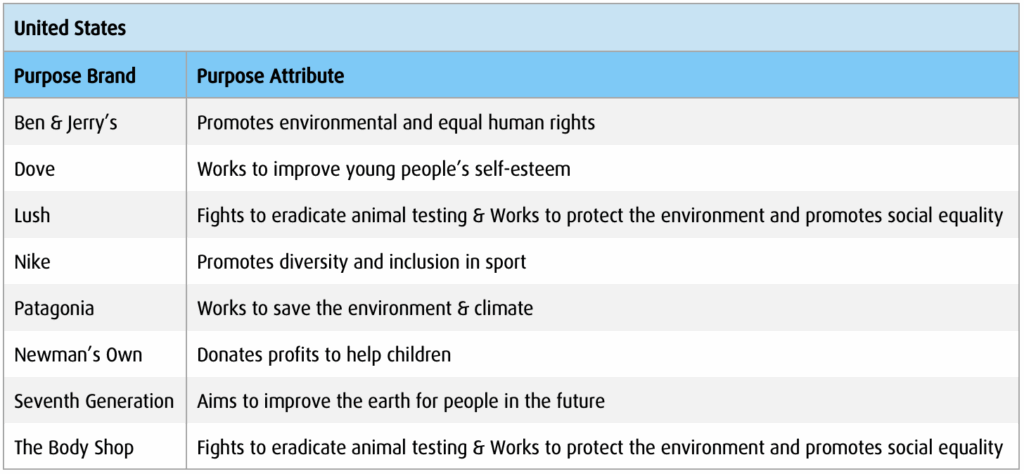
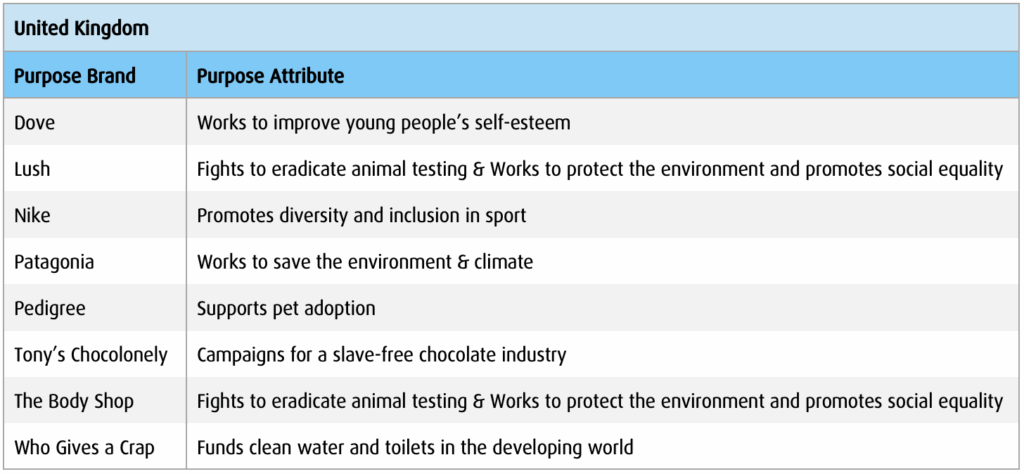
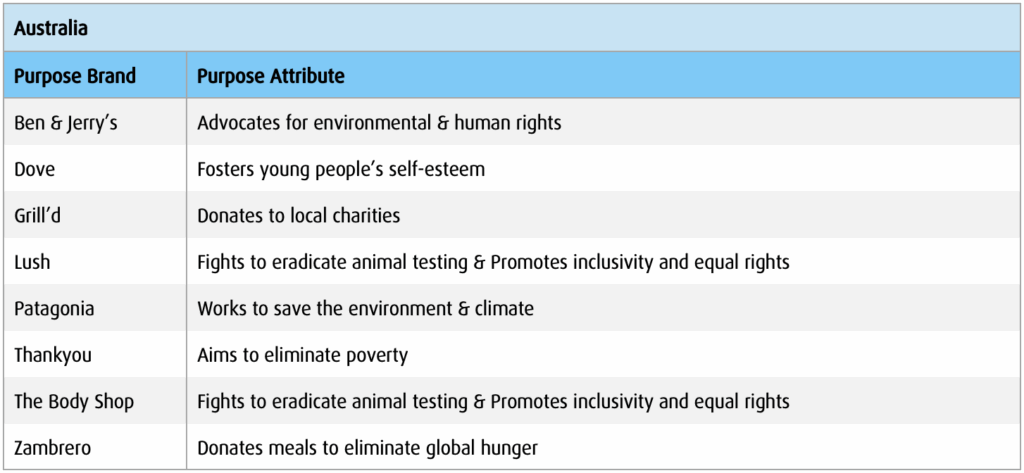
Table 4: List of Dummy Purposes Tested in the UK and US
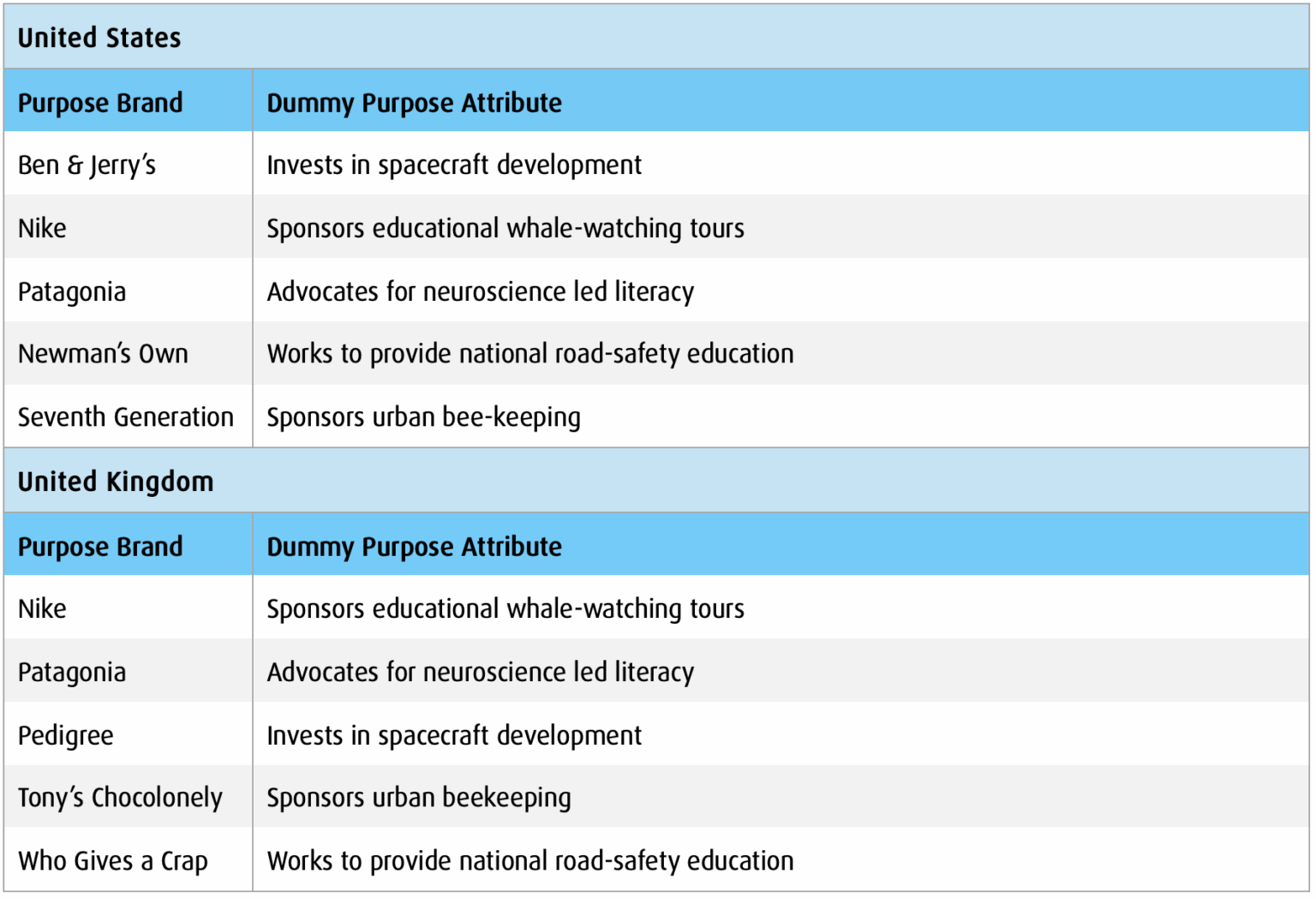
Table 5: Brand Purpose Awareness Results for the Target Brands (sorted by brand size)